Every time a health and fitness magazine publishes a new issue they seem to come up with a new “best” form of exercise for their readers. In fact, if they were being completely honest with you, they would continue to recommend the same things every week – although that probably wouldn’t sell many issues!
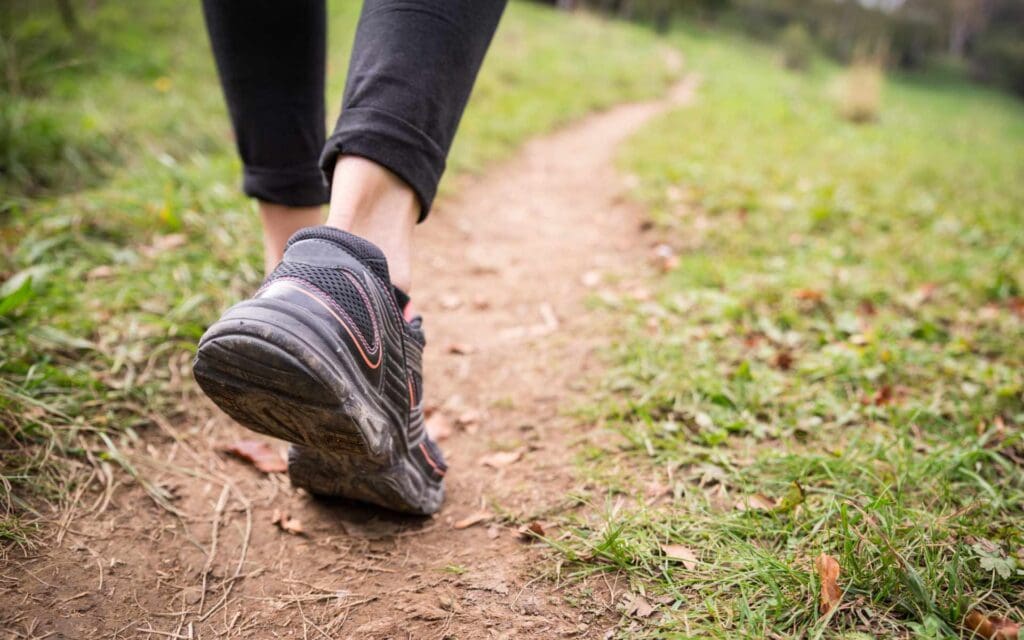
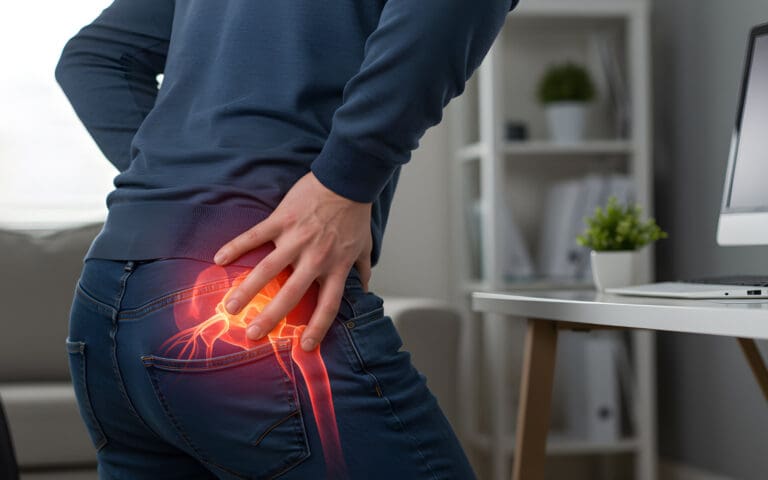
They would, without fail, recommend for us all to walk more. They would remind you every month to ensure you’re getting in your 10,000 steps every day. This is even more true when it comes to recovering from or managing low back pain. Walking seems to be equal to many other forms of exercise for reducing low back pain.
We need to get out more
Unfortunately, in the western world, despite our increasing levels of wealth and knowledge, around one third of adults still do not get enough exercise. The World Health Organisation recommends 150 minutes of gentle or 75 minutes of intensive exercise every week. That’s about 22 minutes of walking each day as part of achieving your 10,000 steps.
This not only makes you healthier and helps to stave off many health conditions, but it also helps with preventing episodes of low back pain. Low levels of physical activity is a risk factor for getting an episode of back pain, so making a simple change to slightly increase your daily steps can have a significant impact on your long-term health.
In terms of low back pain recovery, many different professionals try to sell complex and intricate exercise programmes to aid recovery. It turns out that this is completely unnecessary! A randomised controlled trial from 2019 compared core strength exercises on one hand, against walking on the other, and found that they both reduced back pain.
Not only does walking reduce back pain, but it also actually reduces the recurrence of back pain. Another high-quality study from Australia in 2024 found that education and a personalised walking programme helped to reduce the number of episodes of back pain for the participants, when compared to those who did no walking.
Walking is as good as anything
Now I am not saying that people who regularly go to the gym or who swim or go cycling should give that up and start walking instead. What I am actually saying is that as a tool for health and pain management, walking is as good as anything.
We also need to consider the cost effectiveness of interventions when it comes to musculoskeletal pain and walking ticks another box there as well! Walking is free. Joining a gym, buying a bike and going swimming all involve the participant paying a fee. If someone said to you that there was something that you could do to reduce your chance of back pain, improve your health, costs nothing and only takes 20 minutes out of your day, then that really is the pot of gold at the end of the rainbow.
Walking is also incredibly low barrier. You don’t need to be an athlete to participate, and you don’t need to go to a class to learn how to do it. You can even make it social. Making your regular walk a time when you meet up with friends can help to improve consistency because let’s face it, it makes it feel less like exercise and more like a catch up with mates!
From my own experience, the best forms of health interventions are often the simplest and increasing daily steps is probably the most consistent piece of advice that I give to patients. It’s simple, easy and free – what more could you ask for?
This article by Rob Bailey first appeared in the Diss Express in March 2026.