Sciatica is a very common diagnosis that we see within our clinic and it is also something that we often find it is over diagnosed by patients (especially those who have taken to the internet in an attempt to uncover the cause of their pain).
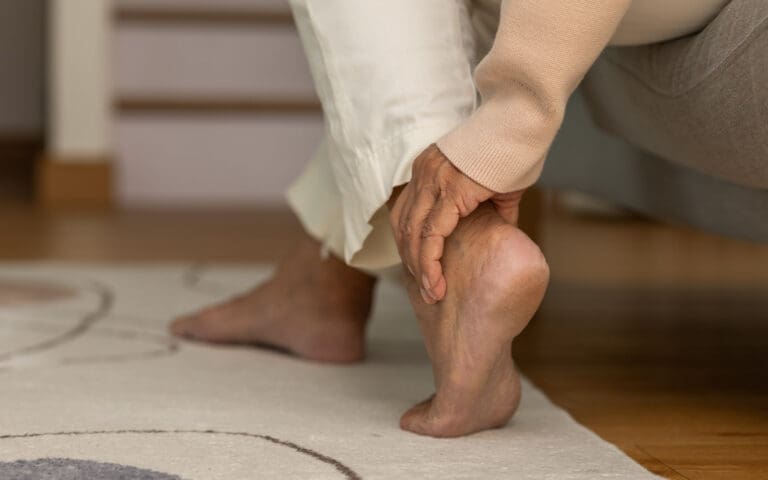
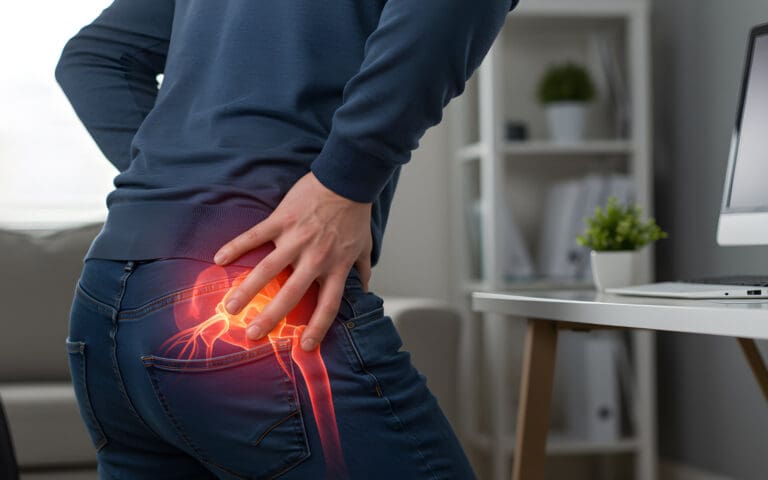
Sciatic is defined as ‘irritation, inflammation of compression of the sciatic nerve or its roots’. The most common symptom of sciatica is pain through the buttocks, back of the thigh and into the lower leg and lateral portion of the ankle. The patient will likely also experience other symptoms such as numbness or pins and needles somewhere in their lower limb.
Sciatic pain can be caused by a number of different structrues. This could take the form of a diagnosis known as Piriformis Syndrome, where tension within the piriformis muscle compresses the underlying sciatic nerve. It can also be caused by other conditions such as disc bulges or herniations, and bony spur growth which is often associated with osteoarthritis (otherwise known as osteophytes). These occur near the base of the spine around the L4-L5 and L5-S1 nerve roots.
However, what we often see is that the majority of patients (and actually some Doctors!) misdiagnose leg pain as being sciatica. Injury or irritation to a number of other structures can also cause leg pain. These include the gluteal muscles, the sacroiliac joint, and the hamstring tendon. So in order for a patient to receive effective treatment we need to be completely sure that the patient is experiencing sciatica and not a “pseudo sciatica”.
When investigating the cause of a patients pain, we conduct a number of neurological and orthopaedic tests in order to rule in or rule out any of the above causes of leg pain. Stynes et al (2018) sets out a clear diagnostic criteria that we should follow when deciding if a patient hs sciatic or not. These criteria include pain below the knee, leg pain which is worse than back pain, numbness or pins and needles, and neurological deficits (such as muscle weakness or decreased reflexes).
Once we have established the presence of sciatic nerve irritation, we need to determine the structures involved. A research paper from 2025 found that lumbar disc herniation is one of the most common structural causes of sciatica. The peak age range for disc herniations is in your thirties and the rate of these decreases with age. On a rare occasion, we may need to send the patient for an x-ray or MRI of their low back to confirm the structures involved in their pain. This is more likely to happen if a patient doesn’t improve after early stage conservative treatment (such as hands-on therapy and rehab).
The likelihood for a patient to develop sciatica can depend on a number of different factors. A study by Cook et al from 2014 identified a number of risk factors associated with the likelihood of developing sciatica for the first time, which included smoking, obesity, occupational factors and overall health status. The majority of the factors that Cook identified were associated with unhealthy lifestyles and are all modifiable.
This suggests that a wider, holistic approach to management and prevention of sciatica is likely to lead to better long term outcomes for patients. These findings are not uncommon, as obesity, smoking and occupational factors have all been shown to be involved with the onset of multi-factorial low back pain (the most common type of low back pain).
When we treat patients we always do our best to uncover the cause of the problem and resolve the patient’s pain as efficiently as possible. However, we also go further than that and take a big picture approach, so that we can help patients to prevent recurrence of their symptoms. This means that we look at their overall health status to see what other changes we can make to help them recover and prevent recurrence. This approach is known as the Biopsychosocial Model and it is the single most effective technique for treating musculoskeletal conditions.
A version of this article by Rob Bailey first appeared in the Diss Express in October 2026.