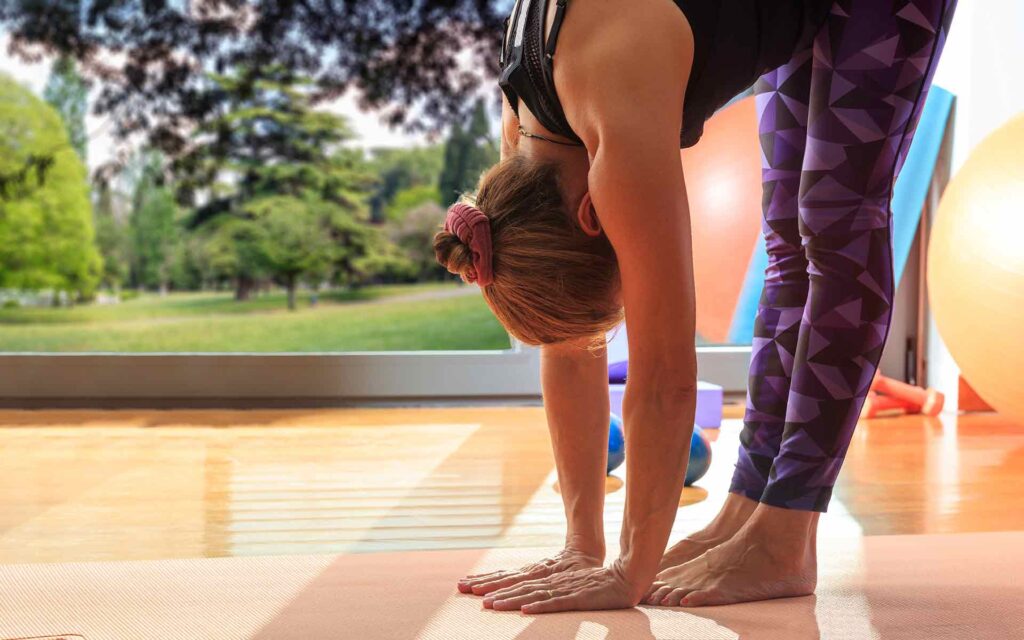
“What exercises should I be doing to look after my back?” is a question that I get asked at least once a week.
The truthful answer and the one that I give every time is “Whatever you want!”.
There is no ‘one size fits all’ when it comes to exercise for your low back. However, there are a few important things that you need to remember when considering exercise for managing a low back problem.
First off, you need to make sure that you’re doing enough. The NHS recommends doing around 150 minutes of gentle physical exercise or 75 minutes of intense physical exercise per week. Sedentary behaviours both at work or in leisure time are correlated with an increase in the risk of developing low back pain (Madhavi et al 2021).
A study by Da Silva et al (2019) found that 69% of people who experienced low back pain had a recurrence within 12 months and that spending more than 5 hours a day sitting was a strong risk factor for that. So, regardless of what you’re doing, making sure that you’re getting enough minutes per week is key.
There is lots of conflicting research on what type of exercise is best.
Fernandez-Rodriqguez et al (2022) found that exercise regimes that included core strength training were better than other forms of exercise.
Core exercise is not better than general exercise for long term management of low back pain (Wang et al 2012).
Saragiotto et al (2016) said that Motor Control Exercises (similar to pilates or yoga) were not better than other forms of exercise for managing low back pain.
Pilates is better than general exercise for managing low back pain than general exercise (Patti et al 2023)
Marshall et al (2013) found that BOTH pilates and using an exercise bike helped to reduce low back pain over the long term.
Given the conflicting ideas and results here, it’s safe to say that we don’t currently know conclusively what the single best type of exercise for managing low back pain is.
So, when faced with the question of what to recommend to my patients I ask a simple question in return… “What sort of exercise do you want to do?”
In my opinion, given all of the conflicting research about what you “should” be doing, it’s safe to say that we know that you need to be doing something regularly and the best form of exercise is the one that you are going to be able to remain consistent with.
Choosing a form of exercise that you are as happy to do on a cold, dark, winter’s evening as you are on a beautiful, warm summer’s afternoon is going to help you to stay consistent.
If we can reliably say that not exercising enough is likely to expose you to another episode of back pain now or in the future, then making sure that you’re moving enough is key to keeping your risk of low back pain low.
This isn’t a free license to go mad and stress your back excessively; you need to maintain a respectful challenge on your body. I’ve seen many patients over the years who went from doing zero to one hundred in the blink of an eye.
You need to allow your body to adapt and get used to the form of exercise that you want to do. But if you allow it time to do that, then you’re likely going to see the long term results that you want.
With my patients, I try to get them exercising in a variety of different ways.
I make sure that they are getting plenty of minutes on their feet dong gentle activities, like walking. I also get them doing mobility and coordination based activities, which allows their bodies to get used to a variety of different types of movements.
Finally, I get them performing some basic strength exercises to build strength and resilience to the movements that they do all the time, such as bending, to help prevent overdoing it when performing these movements in the future.
Move more, move often and move because you enjoy it.
To read Rob Bailey‘s latest column in the Diss Express please click here.