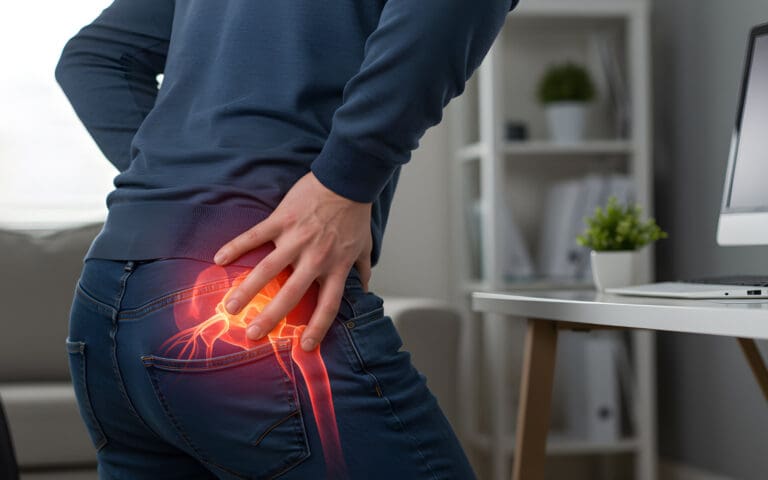
Exercise is the number one treatment for long term low back pain – bar none. The NICE Guidelines make recommendations on all treatments for every health condition that you can think of. Every treatment for low back pain is only recommended to be used alongside exercise. This means that if you’re trying to recover from long term back pain without using exercise, then it is going to be an uphill struggle.
Because of the importance of exercise in a patient’s treatment plan, we always get a clear understanding of what they are already doing prior to them seeing us. Some patients are regular dog walkers, some go to the gym, some are part of our in-house pilates class, while some don’t really do anything at all. We always take time to fully understand what patients do and then we quantify it – how many minutes, how often, the intensity etc.
All this information gives a picture of the patients’ overall physical condition, as well as deciding if their level of exercise is playing a role in their pain – too much or too little.
Take it easy?
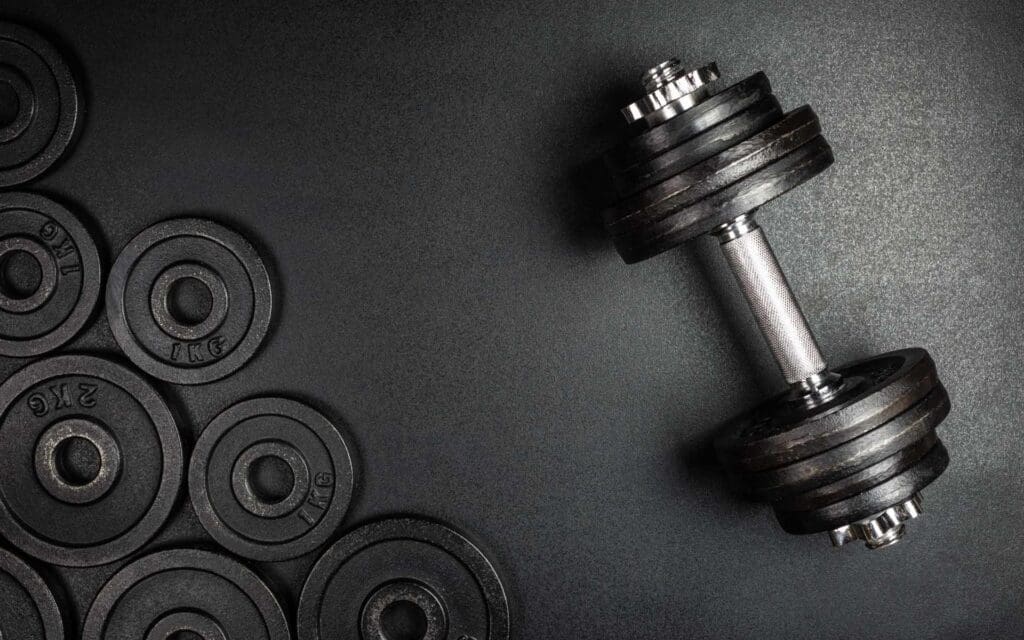
I’m always excited when I hear a patient say that they regularly go to the gym and lift weights. Not Weight-bearing exercise increases bone density and ligament tensile strength, and it can be a fantastic tool for managing pain. But most patients who regularly lift weights caveat this by saying ‘but I only go light’. I’m always disappointed when I hear this.
Possibly patients choose to lift light weights because they believe that they can ‘wear out’ their bodies if they work them too hard. This is a commonly held belief not just by patients, but by medical professionals as well.
There is a long history of poor research on this. Many years ago, a Canadian chiropractor conducted a series of research papers on dead animal tissue and found that excessive, repetitive loading led to tissue damage. This research has influenced treatment offered by many healthcare professionals.
The single biggest flaw in his research that renders his whole argument obsolete is that dead tissue does not heal or recover after injury or loading. So obviously repetitive loading of a dead tissue will damage it, but providing you are a living human, your tissues will recover and heal after you have used or injured them.
The heavier, the better
If you go to the gym and put a heavy load through your spine, it will recover and heal afterwards – it will not wear out! The only exception is repetitive injury of a tissue will likely lead to some long-term changes in the tissue structure. However, if you load your tissues progressively and respectfully, they will adapt, become stronger and MORE injury resistant.
I get almost every single patient I see to do some form of weight bearing exercise from bodyweight squats right up to weighted deadlifts. I always recommend they should start light and then progress it over time. The goal being that we want them to lift a heavy weight for a small number of repetitions, several times a week. Whilst we initially use this as a tool to get patients pain under control, we can also use it as a means for long term management of their condition.
Think of times when you need to lift something heavy. Moving furniture, digging the garden, lifting heavy shopping bags. If you’ve already practised these movements with regular weight lifting, these tasks will be physically easier for you to perform and you’ll have a significantly lower chance of getting pain or injury from performing them.
So, if you do go to the gym and lift weights, there is nothing wrong with going heavy. In fact, I would recommend that you do. The only thing that you need to remember is to make sure that you start at a level you’re comfortable with and then increase the weight progressively over time. It really is as simple as that!
This article by Rob Bailey first appeared in the Diss Express in April 2026.